A rare gathering of championship Jaguars tells the story of one of motorsport’s greatest underdog victories.
Andrew Whyte, Jaguar’s legendary historian and former Director of Public Relations, described Freddy Baker’s remarkable E-Type as “the ultimate true David among the Goliaths.” He wasn’t exaggerating.
In an era dominated by factory-backed Corvettes, Camaros, Datsuns, Mustangs and Porsches, Baker’s aging six-cylinder Jaguar E-Type repeatedly defeated the biggest names in American road racing. Those victories became so significant that they helped convince Jaguar executives they belonged back on the world’s biggest stage.
That remarkable story comes full circle this July as three extraordinary Jaguars, each representing a pivotal chapter in the marque’s racing history, will be displayed together during the International Jaguar Festival at the Pittsburgh Vintage Grand Prix. Jaguar’s selection as the 2026 Marque of the Year and the hosting of the International Jaguar Festival make this one of the most significant Jaguar gatherings ever held in North America.
Freddy Baker’s Giant Killer
The centerpiece of the display is the legendary Gran Turismo Jaguar E-Type driven by Freddy Baker.
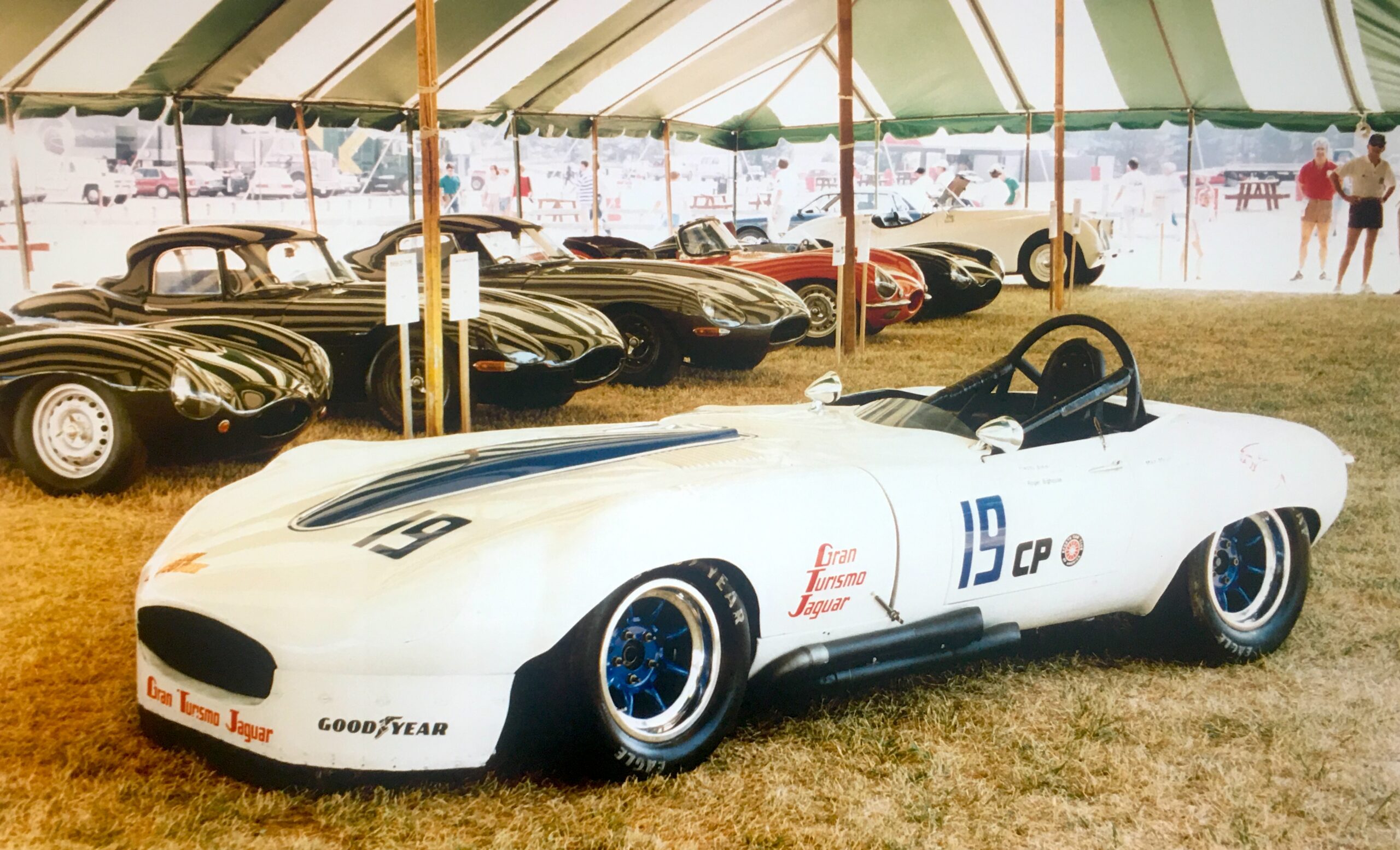
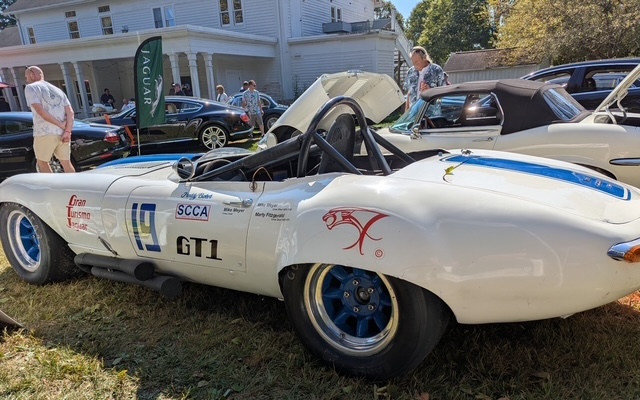
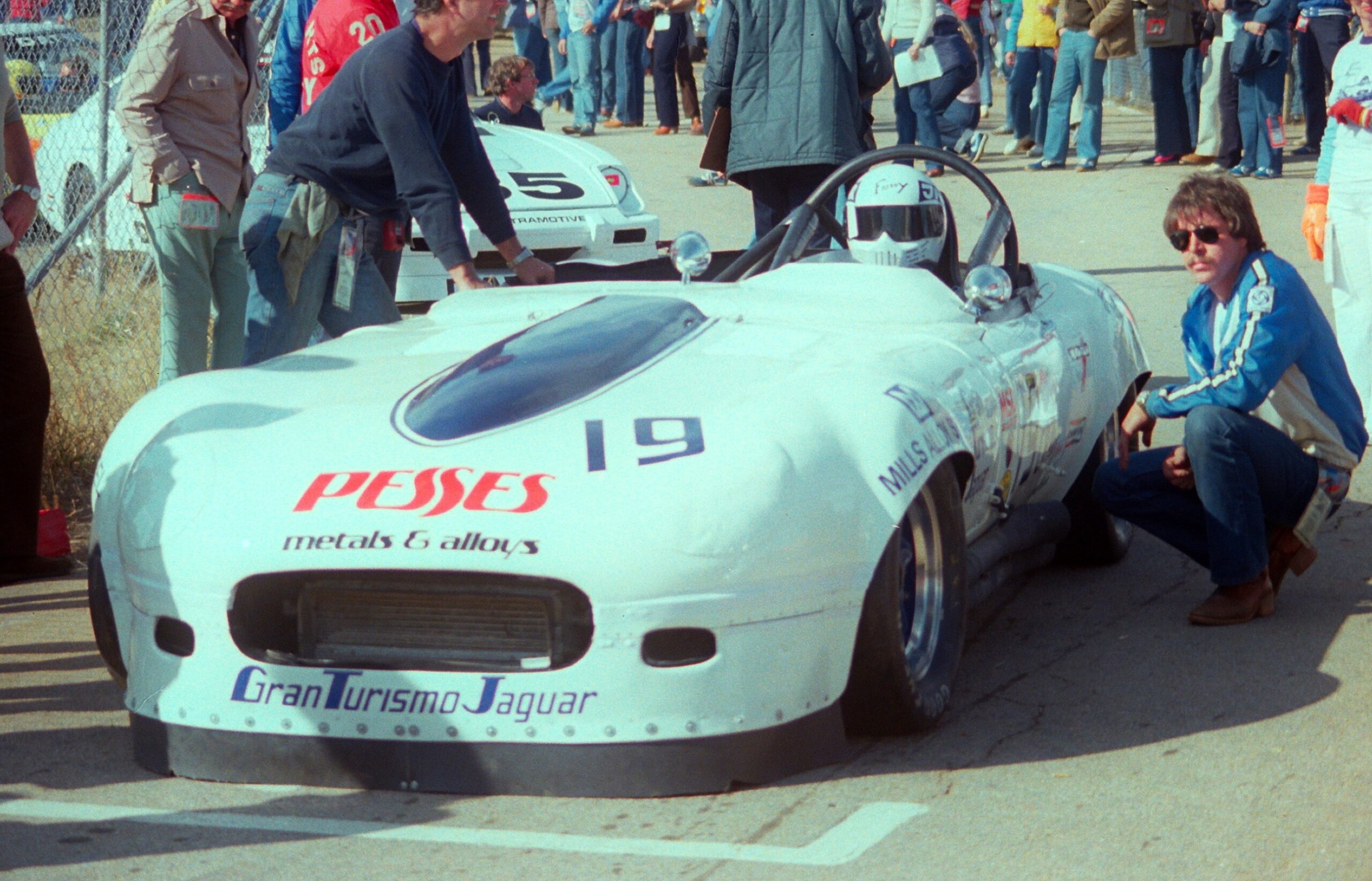
At first glance, it hardly looks like a championship-winning race car. Beneath its sleek body is a six-cylinder engine that, on paper, had little chance against the V8-powered muscle cars and factory-supported imports that ruled SCCA racing in the late 1970s and early 1980s.
Yet Baker and Gran Turismo Jaguar owner Lou Fidanza transformed the E-Type into one of the greatest production race cars in North American history.
The defining moment came in October 1980 at Road Atlanta. Baker defeated reigning SCCA champion Paul Newman, who was driving a factory-backed Datsun 280ZX. The upset was so unexpected that the Atlanta Journal led with the headline, “Baker spoils ‘Hollywood’ script.”
The victories kept coming.
At Mid-Ohio in 1982, Baker delivered one of the most astonishing performances ever recorded in SCCA competition. He won overall while establishing new lap and race records, finishing ahead of every sports car and sedan in the field. It marked his fourth overall victory at Mid-Ohio and further cemented the E-Type’s reputation as the ultimate giant killer.
Andrew Whyte later credited Baker’s success with influencing Jaguar’s leadership to return to international prototype racing, writing that Jaguar executives saw “what a good determined team did in America” and realized the company could once again compete for victories at Le Mans.
The Car That Helped Lead Jaguar Back to Le Mans


That renewed commitment eventually produced one of Jaguar’s most important American race cars: the 1987 Group 44 Jaguar XJR-7.
Built by Bob Tullius’ legendary Group 44 team, the XJR-7 was Jaguar’s IMSA GTP challenger and featured a naturally aspirated 6.0-liter V12 producing approximately 650 horsepower.
Although its competition career lasted just one season, the XJR-7 represented a critical step in Jaguar’s return to international endurance racing. The engineering experience gained by Group 44 helped lay the groundwork for the factory XJR program that culminated in overall victories at the 24 Hours of Le Mans in 1988 with the XJR-9 and again in 1990 with the XJR-12.
The car appearing at Schenley Park is rarely seen outside museums and major concours events.
Carrying the Tradition into the Modern Era


The newest member of the trio is the 2009 Jaguar XKR RSR GT2, built by RSR Racing for the American Le Mans Series.
Powered by Jaguar’s naturally aspirated 5.0-liter V8, the XKR RSR represented Jaguar’s return to front-line GT competition. With its carbon-fiber bodywork, advanced aerodynamics, and endurance-racing pedigree, it demonstrated that Jaguar’s competitive spirit remained very much alive in the modern era.
While separated by decades of technology, the XKR RSR shares the same philosophy as Baker’s E-Type and the Group 44 prototype: elegant engineering combined with relentless performance.
One Weekend. Three Eras of Jaguar Racing.
Together, these three Jaguars tell one continuous story.
The E-Type proved Jaguar could defeat the giants.
The XJR-7 helped return Jaguar to the world’s greatest endurance race.
The XKR RSR carried that heritage into the modern GT era.
Seeing all three together is an exceptionally rare opportunity and a fitting tribute as Jaguar celebrates its fifth appearance as Pittsburgh Vintage Grand Prix Marque of the Year. For enthusiasts, historians, and racing fans alike, they represent nearly half a century of innovation, determination, and championship success.
These extraordinary Jaguars will be on display during Race Weekend, July 18-19, at the International Jaguar Festival in Schenley Park as part of the Pittsburgh Vintage Grand Prix’s International Car Show. Visitors can see these historic race cars along with nearly 200 Jaguars participating in the festival, more than 3,000 show cars, vintage racing on the legendary Schenley Park circuit, and dozens of automotive attractions throughout the weekend. Admission is just a $20 spectator donation for the entire weekend, with children 12 and under admitted free. Whether you’re a lifelong Jaguar enthusiast or simply appreciate automotive history, this is a rare opportunity to experience some of the most significant Jaguars ever built, all in one place.
The Pittsburgh Vintage Grand Prix gratefully acknowledges the Jaguar Club of Pittsburgh, Jim Dolan, and Passport Transport for their generous support in bringing these rare and historic racing Jaguars to Schenley Park.